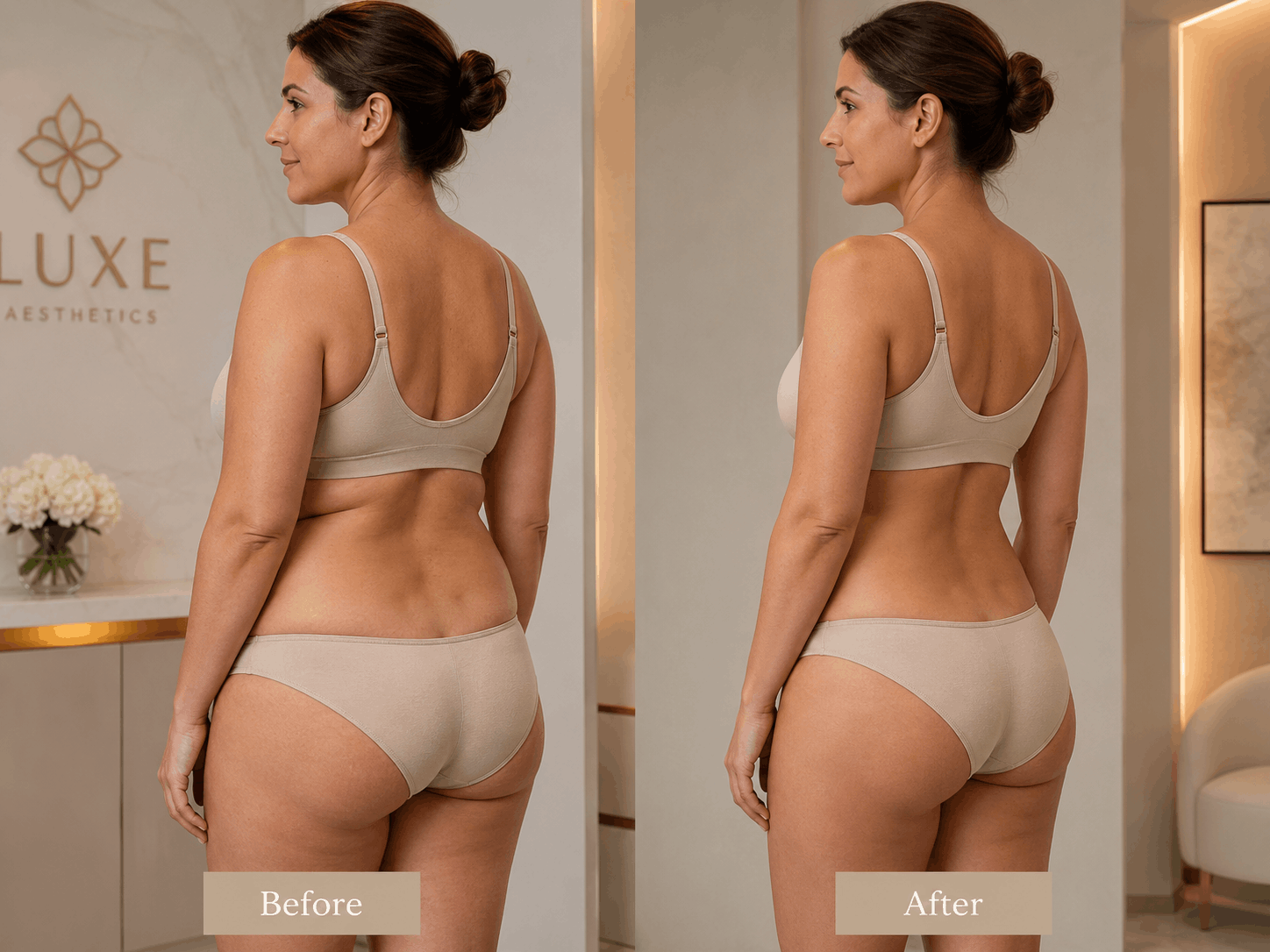
Liposuction is the most common plastic surgery operation in the world and the one most often misunderstood. It is not a weight-loss procedure. It is not a treatment for visceral fat. It will not tighten loose skin on its own. What it does — exceptionally well, in the right candidate — is reshape the body by removing pockets of subcutaneous fat that diet and exercise cannot reach. In Cartagena, where high-definition body contouring has become its own subspecialty, modern liposuction (especially VASER HD lipo) is a sculpting operation, not a debulking one.
Traditional, power-assisted, VASER: what’s the difference
Liposuction technologies have evolved through three generations.
Traditional (suction-assisted lipoplasty, SAL): a cannula moves manually through the fat layer, breaking it apart by mechanical action. Effective for volume reduction but harder on the surgeon, more bruising for the patient, and less precision in defined areas.
Power-assisted (PAL): the cannula vibrates at high frequency, doing the mechanical work more efficiently. Faster, less bruising, more even result.
VASER (ultrasound-assisted): ultrasound energy emulsifies fat selectively before suction. The fat layer becomes liquid; surrounding tissue (blood vessels, nerves, connective tissue) is preserved. This is what enables high-definition sculpting — the surgeon can work in the subcutaneous plane safely enough to define abdominal lines and muscle contours.
HD Lipo: what “definition” actually means
High-definition liposuction goes beyond removing fat. It selectively sculpts the subcutaneous layer to reveal underlying muscle anatomy. In the abdomen this creates the visible vertical line (linea alba), the lateral V (semilunar lines), and in male patients the upper-abdominal squares. In the arms, definition along the biceps and deltoids. In the back, the spinal groove. This is not just lipo with more aggression — it’s a different planning, different cannulas, different layers worked, and a different aesthetic goal. Not every patient wants this look. Many do.
Areas treated most often in Cartagena
The most-requested combinations:
- 360 lipo: abdomen + flanks + lower back + bra-line. The most common request, especially in patients combining with BBL.
- Upper arms: for “bingo wings” or simply slimmer arm contour. Skin retraction is usually good in patients under 40.
- Inner and outer thighs: often combined with 360 for full-body contouring.
- Submentum (under chin): small-cannula work that defines the jawline; recovery is quick.
- Male chest: for gynecomastia or pseudogynecomastia, sometimes with VASER alone, sometimes with a small excision.
Who is the right candidate
The classic candidate is within 10 to 15% of their goal weight, has localized fat that doesn’t respond to diet and exercise, and has reasonable skin elasticity. Patients with significant skin laxity need either skin-tightening adjuncts or, in many cases, a different operation entirely (abdominoplasty, body lift). Patients with poor cardiovascular health, uncontrolled diabetes, or active smoking habit are not good candidates. BMI above 30 typically requires medical optimization before scheduling.
Skin retraction: the variable that matters
How well your skin will retract after fat removal depends on age, skin quality, sun damage history, prior pregnancies, and the area treated. VASER’s ultrasound energy has a measurable skin-tightening effect — about 20 to 25% better retraction than traditional liposuction. In selected cases, an additional skin-tightening device (Renuvion, BodyTite) is added during the same session to maximize the result. None of these technologies can fully replace surgical skin excision in patients with significant laxity.
Recovery: faster than most expect
Day 1 to 3: soreness, swelling, fluid drainage from the small incision sites for 24 to 48 hours, compression garment 24/7. Day 4 to 7: walking comfortably, light bruising visible, drainage stopped, lymphatic drainage massage starts. Day 7 to 10: return to office work for most patients. Week 2 to 3: full upright posture, cardio cleared. Week 4: gym for cardio. Week 6: full upper-body lifting. The compression garment is worn for 6 weeks total — 3 weeks 24/7, then 3 weeks daytime only.
The lymphatic drainage massage protocol is essential — typically 10 to 15 sessions starting at day 4 to 5 and continuing through week 6. Skipping these creates more lumpiness, more fluid retention, and a less refined final contour. This is non-negotiable in modern protocols.
Caribbean climate considerations
Cartagena’s humidity makes the compression garment uncomfortable, but the alternative is worse — inadequate compression compromises skin retraction and final contour. Use two garments to rotate through laundry. Light cotton clothing over the garment. No sun on the small incision sites for 6 months (they’re tiny but they darken easily in tropical UV). Saltwater swimming after week 4. Pool swimming after week 6.
Combining with other procedures
Liposuction is one of the most-combined operations. Pairings:
Lipo + BBL: the fat removed is used for gluteal grafting. Standard combination in Cartagena.
Lipo + abdominoplasty: abdominal liposuction is built into the abdominoplasty plan; flank liposuction is added.
Lipo + breast surgery: body contouring with breast augmentation or lift, common in mommy makeovers.
Lipo + skin tightening (Renuvion/BodyTite): for borderline skin-laxity cases.
Mistakes we see most often
Performing liposuction in patients who actually needed abdominoplasty — fat reduces, skin doesn’t retract, patient is disappointed. Treating only the abdomen and not the flanks, leaving a “block” silhouette. Skipping lymphatic drainage massages. Returning to lifting too early. Aggressive HD definition in patients whose lifestyle (significant weight fluctuation) won’t maintain the result. Sun exposure on incision sites in the first 6 months.
Liposuction prices in Cartagena (2026)
Single-area liposuction (e.g., submentum, arms): 5 to 9 million COP.
Abdomen + flanks: 10 to 14 million COP.
360 liposuction (abdomen, flanks, lower back, bra-line): 12 to 18 million COP.
VASER HD lipo (full torso definition): 16 to 24 million COP.
Liposuction combined with BBL: 14 to 22 million COP.
Lipo + skin-tightening device (Renuvion): adds 4 to 8 million COP.
Pricing includes surgeon’s fee, board-certified anesthesia, accredited surgical facility, compression garment, lymphatic drainage protocol, and standard follow-up package. Quotes substantially below the range usually mean a less experienced surgeon, non-accredited facility, or sedation-only anesthesia.
Frequently asked questions
Will the fat come back? Removed fat cells don’t regenerate. Remaining cells can still enlarge with weight gain, so significant weight changes do affect the result. Stable weight maintains it.
When can I fly home? 5 to 7 days for single-area cases, 7 to 10 days for 360 lipo, 10 to 14 days if combined with major procedures. Compression stockings on long flights.
Will I see the result immediately? No. The initial swelling makes the area look fuller for the first 2 weeks. Real contour starts at week 4, refines through month 3, and reaches its final form at month 6.
How permanent is HD definition? The fat removed is permanent. Maintaining the “definition” look depends on weight stability and reasonable fitness. Significant weight gain blurs the lines.
The takeaway
Liposuction in Cartagena should be planned as a sculpting operation, not a fat-reduction operation. The conversation should cover which technique (VASER vs PAL), which areas, what level of definition, what skin retraction to expect, and what your post-op care commitment looks like. A surgeon who walks you through those details is a surgeon who’s planning for your result at month 6 — not just for the surgery itself.